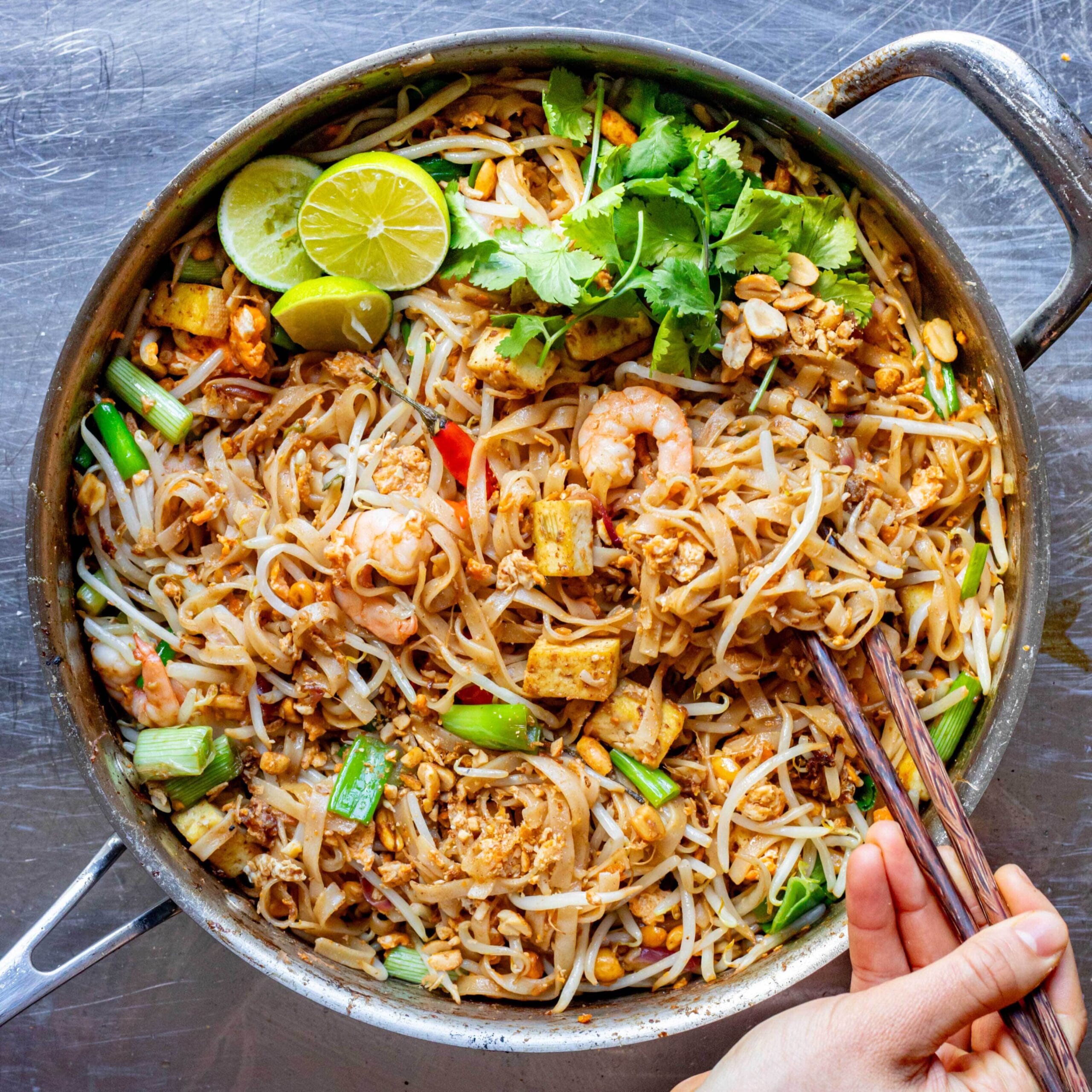
Introduction & My Personal Story
Ah, Pad Thai. Just the name alone takes me back to a bustling street corner in Bangkok, where the air is thick with the scent of sizzling noodles and the chatter of eager diners. It was my first visit to Thailand, over a decade ago, and the experience was nothing short of transformative. As a young chef, I was eager to explore the world of flavors beyond my own kitchen. I remember watching a street vendor deftly maneuver a wok over a flickering flame, her hands moving in a dance as she tossed noodles, shrimp, and a vibrant array of vegetables. It was in that moment, amidst the chaos and color of the market, that I understood the true essence of Pad Thai.
In those early days, I was captivated by the balance of flavors: the tanginess of tamarind, the sweetness of palm sugar, the salty depth of fish sauce, and the subtle heat of chili. Over the years, I have recreated that dish countless times, each attempt bringing me closer to the heart of Thai cuisine. In my 5 years of experience as a professional chef, I’ve learned that a great Pad Thai is not just about the ingredients; it’s about the passion and precision that go into every step. Today, I want to share with you my refined, Michelin-inspired version of this beloved dish, a recipe that honors its roots while elevating it to new culinary heights.
Why You’ll Love This Recipe
- Authentic flavors with a touch of sophistication.
- Perfect balance of sweet, sour, salty, and spicy.
- Quick and easy to prepare once ingredients are ready.
- Customizable with your choice of protein.
- A delightful dish that impresses guests.
Detailed Ingredients
For this recipe, sourcing the best ingredients is key. Head to your local Asian market or specialty store to find everything you need.
- Rice Noodles: 200g, look for fresh or medium-width dried rice noodles.
- Prawns: 200g, large, deveined, and peeled.
- Tofu: 150g, firm, cut into cubes.
- Shallots: 2, finely chopped.
- Garlic: 3 cloves, minced.
- Dried Shrimp: 1 tablespoon, rehydrated and chopped.
- Pickled Radish: 1 tablespoon, finely chopped.
- Eggs: 2, lightly beaten.
- Bean Sprouts: 100g, fresh and crisp.
- Garlic Chives: 50g, cut into 2-inch pieces.
- Peanut Oil: 3 tablespoons.
- Peanuts: 3 tablespoons, crushed.
- Lime: 1, cut into wedges.
- Chili Flakes: to taste.
Step-by-Step Instructions
Step 1: Prepare the Noodles
Soak the rice noodles in warm water for about 30 minutes until they are pliable but firm. Drain and set aside.
Step 2: Make the Sauce
In a small bowl, mix 3 tablespoons of tamarind paste, 3 tablespoons of fish sauce, and 3 tablespoons of palm sugar. Stir until the sugar dissolves completely. Set aside.
Step 3: Cook the Protein
Heat 1 tablespoon of peanut oil in a wok over medium-high heat. Add the prawns and cook until they turn pink, about 2 minutes. Remove and set aside. In the same wok, add another tablespoon of oil and fry the tofu cubes until golden brown. Remove and set aside.
Step 4: Stir-Fry Aromatics
Add the remaining oil to the wok. Stir-fry the shallots, garlic, dried shrimp, and pickled radish for about 1 minute until fragrant.
Step 5: Combine Ingredients
Add the drained noodles to the wok along with the prepared sauce. Toss well to coat the noodles evenly. Add the prawns, tofu, and beaten eggs, stirring constantly until the eggs are cooked and everything is well mixed.
Step 6: Add Vegetables
Toss in the bean sprouts and garlic chives. Stir-fry for another 2 minutes until the vegetables are just tender.
Step 7: Serve
Transfer the Pad Thai to a serving platter. Sprinkle with crushed peanuts and garnish with lime wedges and chili flakes. Serve immediately.
Common Mistakes to Avoid
Overcooking the Noodles: Soak only until pliable; they will cook further in the wok.
Overloading the Wok: Cook in batches if necessary to maintain high heat.
Skipping the Sauce: The sauce is the soul of the dish; never skip or skimp on it.
How to Store & Reheat
Store leftovers in an airtight container in the refrigerator for up to 3 days. To reheat, add a splash of water and stir-fry over medium heat until warmed through.
Ingredient Substitutions
- Rice Noodles: Use soba or glass noodles if unavailable.
- Prawns: Substitute with chicken or extra tofu for a vegetarian option.
- Peanut Oil: Can be swapped with canola or vegetable oil.
Nutrition Facts
- Calories: 450
- Protein: 25g
- Fat: 15g
- Carbs: 55g
- Serving Size: 1 plate
Frequently Asked Questions
Q: Can I make Pad Thai without fish sauce?
A: Yes, you can use soy sauce as a substitute for a vegetarian version.
Q: How do I achieve the best texture for the noodles?
A: Soak them just until pliable, then cook quickly in the wok.
Q: Can I freeze Pad Thai?
A: Freezing is not recommended as it alters the texture of the noodles.
Q: What can I use instead of tamarind paste?
A: A mix of lime juice and brown sugar can mimic the tangy sweetness.
Leave a Reply